SanDisk's 4.6x Revenue Outlook: What It Signals for Kioxia
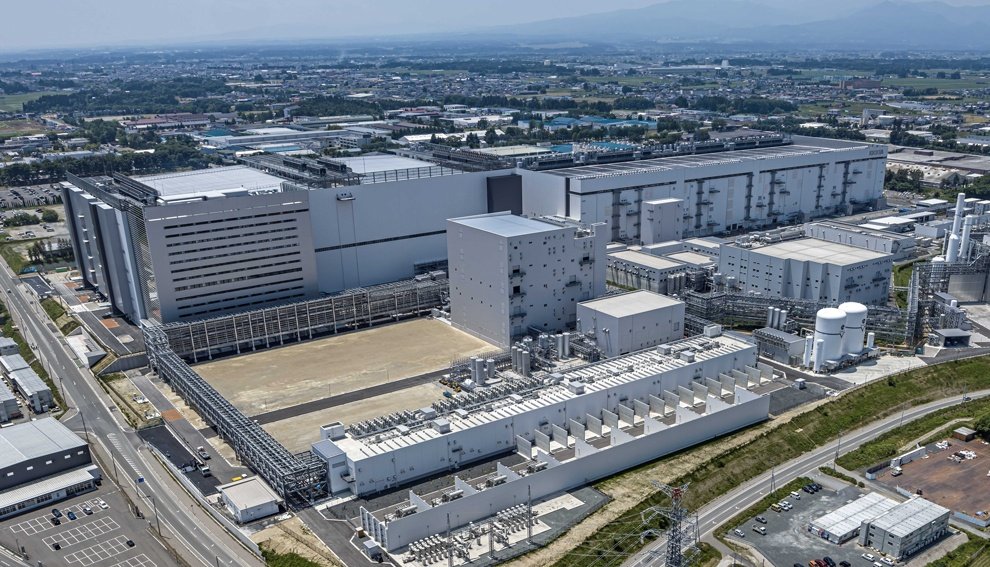
SanDisk reports earnings early on October 30, Korea time, and Kioxia follows that evening in Japan. The revenue outlook SanDisk gave in August for this quarter is $10.3 billion to $10.8 billion; at the midpoint, that is about 4.6 times the figure a year earlier. Because the two companies share NAND fabs, SanDisk’s outlook for next quarter gives a signal of Kioxia’s results a day ahead.
SanDisk revenue up 4.6 times, and the market expects even more
SanDisk reports results for the first quarter of fiscal 2027 (July-September) after the close on October 29, US time. The company’s outlook is revenue of $10.3 billion to $10.8 billion and adjusted earnings per share of $44 to $46. Revenue in the same quarter a year earlier was $2.31 billion.
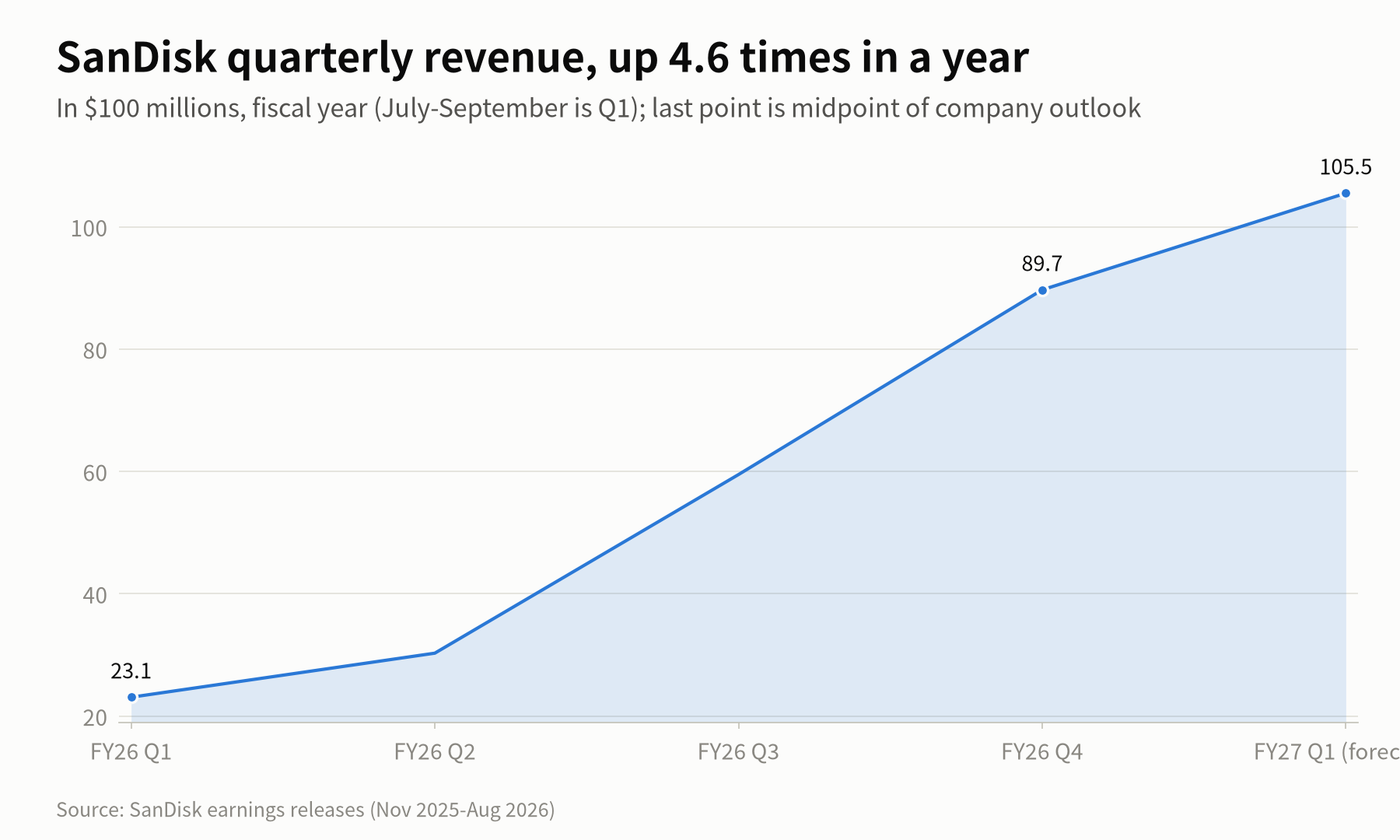
Revenue grew from $2.3 billion to $9 billion in three quarters. Last quarter it rose 51% in a single quarter; the midpoint of this quarter’s outlook is an 18% increase, so the slope is flattening.
Market estimates are already above the midpoint of the company’s outlook ($10.55 billion). TradingKey’s consensus is revenue of $10.64 billion and EPS of $46.22, and TipRanks’ consensus is revenue of $10.72 billion. Wedbush raised its revenue estimate from $10.38 billion to $11.45 billion.
SanDisk has beaten consensus EPS for four straight quarters. So this time, what is likely to decide the stock’s move is not whether results land within the outlook range but how high the outlook for next quarter comes in. At the August report, results also beat expectations, but the outlook fell short and the stock dropped about 7% in after-hours trading.
Kioxia already jumped 13.8% a day earlier
On October 28, SK hynix reported record third-quarter results: revenue of 104.6155 trillion won and operating profit of 83.3338 trillion won. It also said three years’ worth of its DRAM and HBM volume is effectively spoken for.
The same day in Tokyo, Kioxia shares rose 13.8% (14,340 yen). In the US, SanDisk and Micron were reported to have risen about 4%.
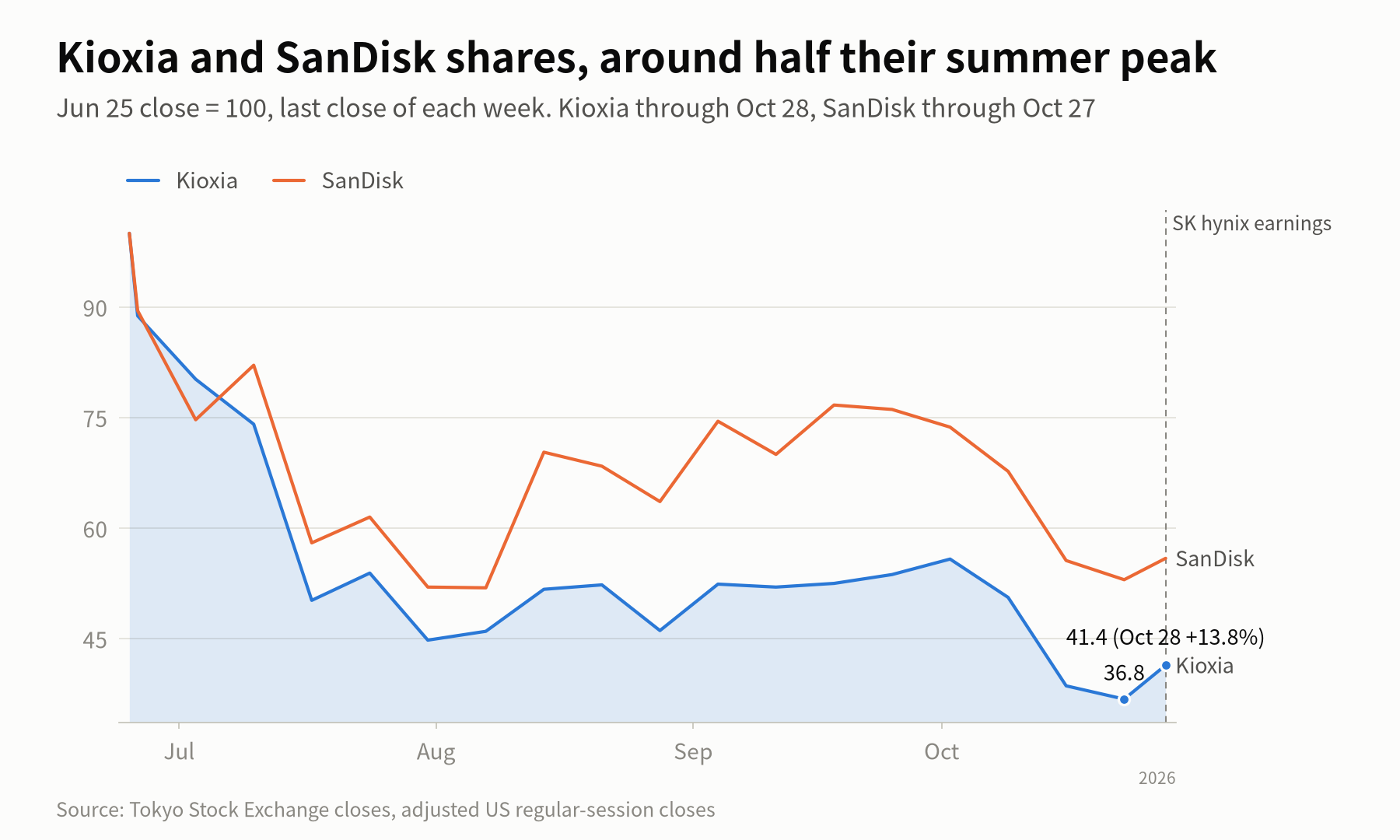
Even so, both stocks are well below their summer levels. SanDisk is about 44% below its June 25 closing high (as of October 27), and Kioxia is about 59% below its level that day (as of October 28). Expectations for the results and doubts about them are both running high.
NAND prices are rising, but more slowly
At the end of September, TrendForce projected that Q4 NAND flash contract prices would rise 15-20% from the previous quarter. For enterprise SSDs used in AI servers, it projected a higher 23-28%. Demand from smartphones and PCs, however, remains weak.
In its May outlook, TrendForce projected NAND industry revenue to grow about 280% this year and 40% in 2027, to $379.4 billion. That means growth slows sharply, and it also said supply could loosen in the second half of 2027.
There is an opposing view. Citi expects data-center storage demand to exceed supply through 2028.
Three signals from SanDisk’s numbers for Kioxia
On July 31, Kioxia forecast July-September revenue of 2.39 trillion yen and net income of 1.27 trillion yen (assuming 162 yen to the dollar). Its operating profit forecast of 1.89 trillion yen was below the LSEG consensus of 1.95 trillion yen. So the starting point is how far the actual numbers clear that bar.
- Next quarter’s outlook: The figure SanDisk gives for October-December revenue is the most direct signal. Since the two make the same NAND in the same fabs, Kioxia’s outlook is likely to point the same way.
- Data-center revenue: SanDisk’s data-center revenue last quarter was $2.98 billion, double the previous quarter. If that growth continues, it means the business can hold up even if consumer demand is weak.
- Capital spending: If the two companies sharply increase fab investment, supply would grow in 2027, and the pace of price increases could slow sooner.
Kioxia’s results come out at 6:45 p.m. on October 30 (the same time in Korea and Japan).
Figures in this post are as of October 29, before the reports, and this is not investment advice about any particular stock or product.
Frequently asked questions
Q1. How are SanDisk and Kioxia related?
A1. The two companies jointly operate NAND flash fabs in Yokkaichi and Kitakami, Japan. SanDisk took over this joint venture when it was spun off from Western Digital in 2025. That is why one company’s results give clues about the other’s.
Q2. How do NAND contract prices differ from spot prices?
A2. Contract prices are set quarter by quarter between makers and large customers; spot prices are what the chips trade for at any given moment in the distribution market. Contract prices track earnings more closely.
Q3. Can investors in Korea purchase Kioxia shares?
A3. Kioxia is listed on the Tokyo Stock Exchange (code 285A), so its shares can be traded through a brokerage account that supports Japanese stocks. On October 1 it carried out a stock split, turning each share into three, and the yen exchange rate also affects returns.
Sources: SanDisk earnings releases (November 6, 2025; April 30, 2026; August 5, 2026), Kioxia Q1 earnings release (July 31, 2026), SK hynix Q3 results (October 28, 2026), TrendForce (May 2026, September 2026), TipRanks, TradingKey and Motley Fool (October 2026), CoinDesk (October 28, 2026); share prices: Tokyo Stock Exchange closing prices and adjusted US regular-session closes; lead photo: Kioxia / Kioxia press release (Kitakami plant)
Information only, not investment advice.
Related reading
More in Blog
- Caterpillar as an AI Stock: Why Midterm Data Center Curbs Hit It
- US Chip Stocks Rebound, but AI Leaders Win Back the Least
- The SOX Plunge: 3 Reasons Only Chips Fell After the Midterms
- Chip Stocks Tonight: Three Things to Watch as AMD Reports
- After the SOX Plunge: Three Checkpoints for This Week
- AI Spending Over Earnings: 3 Reasons TSMC Shares Slipped
- Why Kioxia Disappointed After Earning 2 Trillion Yen in Three Months
- The KOSPI's Roller Coaster Won't Stop. Is the Nikkei on It Too?
- Is Samsung Handing a Key HBM Chip to TSMC?