Nasdaq Down Two Weeks: Can Google, Microsoft and Amazon Stop It?

The Nasdaq Composite closed at 25,955.34 on October 23, its second straight weekly decline. It lost 4.4% the week before and 0.7% this week, 5.1% over the two weeks. Whether Microsoft, Alphabet (Google) and Amazon, which report next week, can stop the decline depends less on their profits than on their AI spending plans and cloud growth.
Why the Nasdaq struggled for two weeks
The worry shifted from “too much spending on AI” to “less spending”
Kyle Rodda, an analyst at Capital.com, said the worry behind this decline has moved from overinvestment to cutbacks. Meta left its capital spending outlook unchanged and said little about plans beyond that, and Tesla cut its capital spending outlook for this year by 20%.
On the 22nd, disappointing results from Meta and Lam Research came on top of that, and the Nasdaq fell 2.6% in a single day, its biggest one-day drop since June.
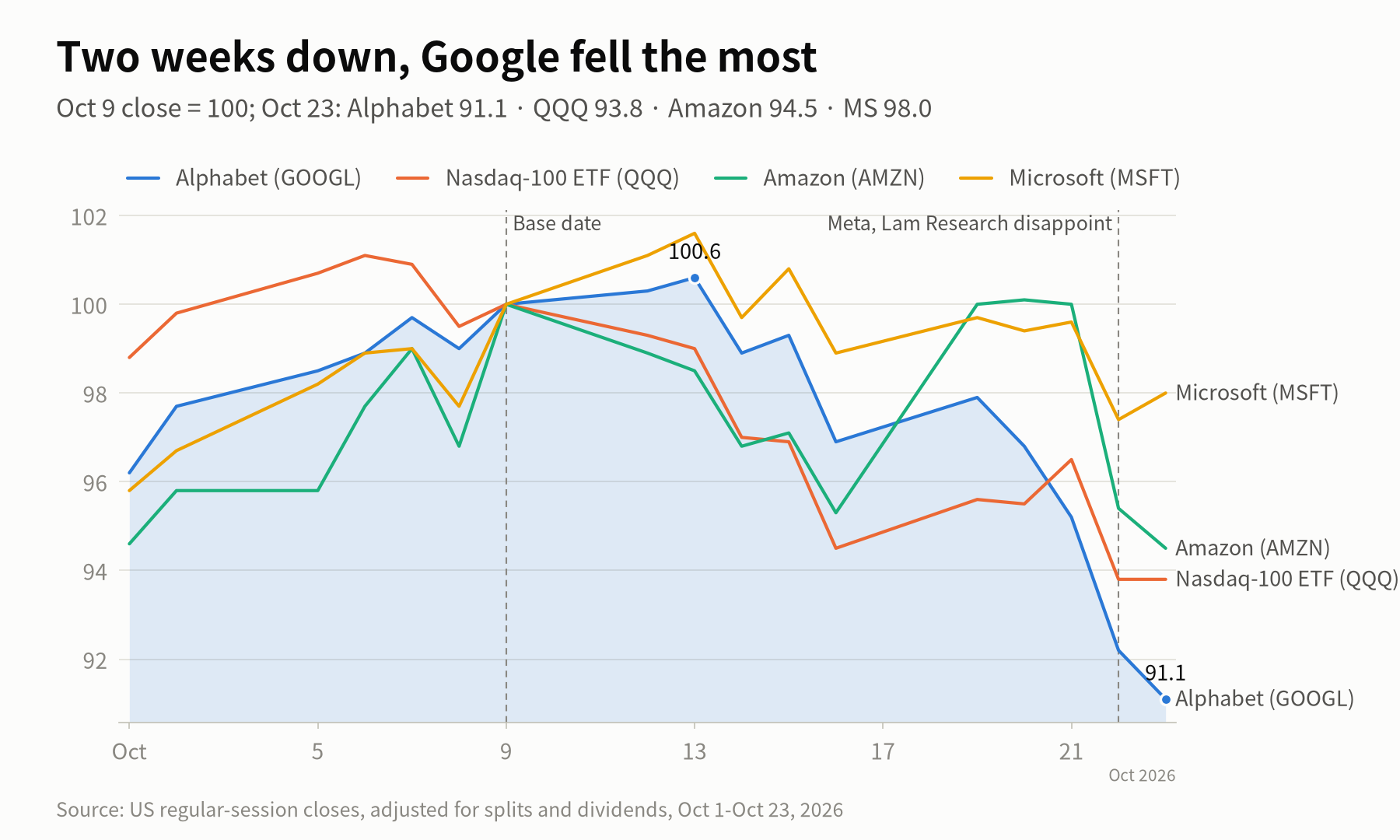
Compared with October 9, before the decline began, Alphabet fell the most, by 8.9%. Amazon fell 5.5% and Microsoft 2.0%.
5% yields and oil added pressure
The US 10-year Treasury yield was back above 5% on the 23rd, at 5.001%. West Texas Intermediate (WTI) crude rose 3.8% to $103.27 a barrel, and Brent topped $116, its highest since June 2022. Oil jumped as US-Iran tensions flared again, which gives the Fed a reason to raise rates further.
Four things that will show whether Google, Microsoft and Amazon can stop the decline
1. October 28: Microsoft’s and Alphabet’s spending plans
Both companies report after the US close on the 28th.
- Microsoft: Its revenue guidance for this quarter is $89.85 billion to $90.95 billion. It has guided for Azure, its cloud business, to grow about 45% in constant currency, and said capital spending this quarter will exceed $50 billion.
- Alphabet: In July it raised its capital spending outlook for this year to $195 billion to $205 billion, the second quarterly increase in a row. Google Cloud revenue rose 82% year over year in Q2.
If the plans hold or grow, the worry about spending less would ease. The other thing to watch is whether cloud revenue keeps pace with the added spending.
2. October 29: How fast Amazon’s AWS is growing
Amazon reports after the US close on the 29th. Its Q3 revenue guidance is $197 billion to $202 billion, up 9-12% from a year earlier.
AWS revenue grew 36.8% in Q2, its fastest growth in 18 quarters. Amazon also raised its capital spending plan for this year to about $220 billion.
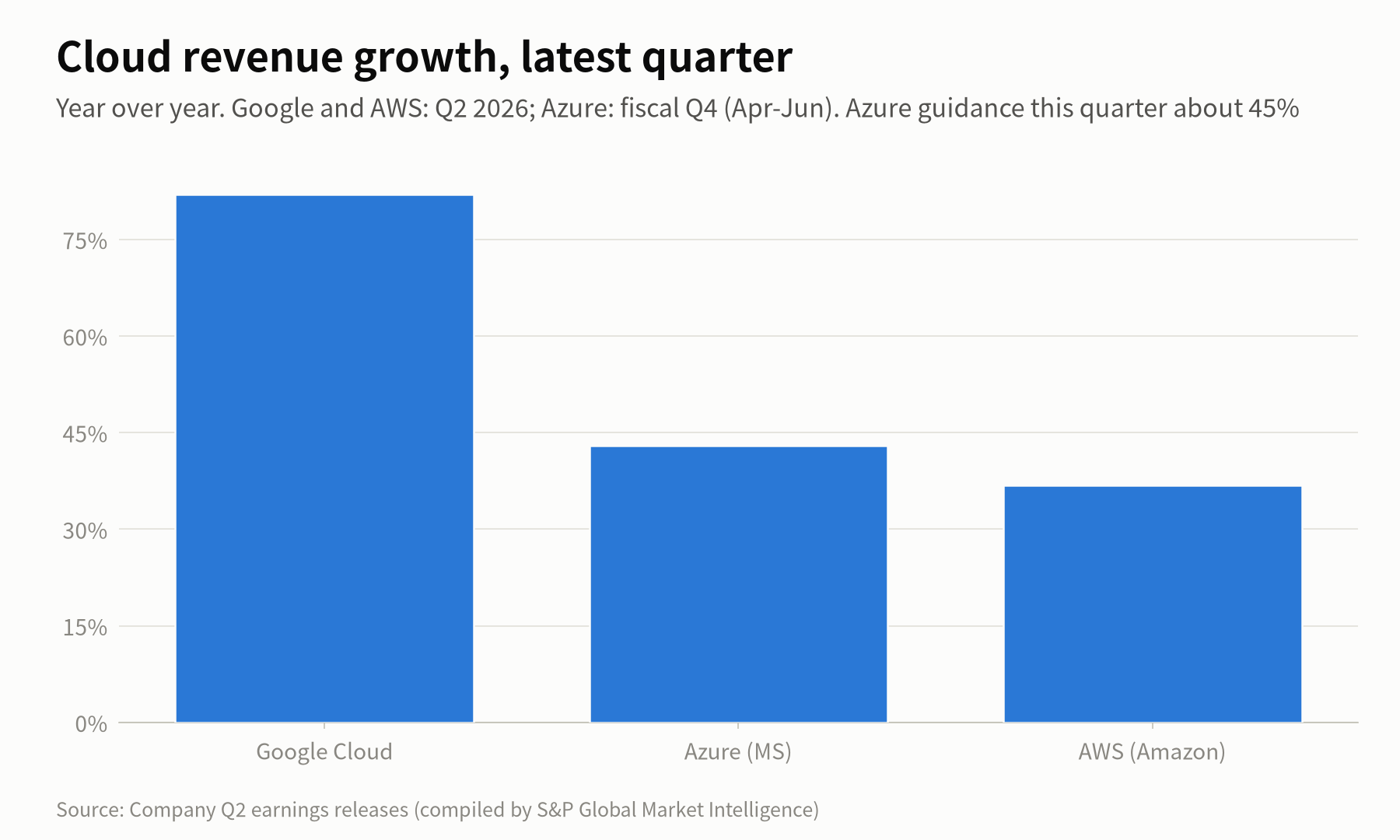
Cloud has to keep growing this fast for the added spending to read as growth rather than a burden. The key question in these results is whether that pace holds.
3. October 28: The Fed’s signal on December
The Fed announces its rate decision at 2 p.m. US time on the 28th. In September it raised rates for the first time since July 2023.
The market expects a hold at this meeting, but prices about an 82.8% chance of a December hike, according to CME FedWatch (October 20). Chair Kevin Warsh has named October and December as decision points. If he all but signals a December hike at his press conference, pressure from rates could build again.
4. October 29: Q3 GDP and the 5% yield line
The advance estimate of US Q3 GDP comes out at 8:30 a.m. (US Eastern time) on the 29th. Strong growth is good for the economy, but it can also be read as grounds for a rate hike.
In Korean time (with US daylight saving time):
- 3 a.m., October 29: Fed rate decision
- Around 5 a.m., October 29: Microsoft and Alphabet earnings
- 9:30 p.m., October 29: US Q3 GDP
- Around 5 a.m., October 30: Amazon earnings
This decline began not with weak earnings but with doubts about the pace of AI spending. That is why a single line on the three companies’ spending plans could move the index more than their profit figures.
This summary is as of October 24 and is not investment advice on any stock or product.
Frequently asked questions
Q1. If big tech earnings are strong, does the Nasdaq rebound right away?
Not necessarily. Even if profits beat expectations, shares can fall if the capital spending outlook or cloud growth falls short. In July, Alphabet also posted strong results and raised its spending outlook, but its shares slipped right after the announcement.
Q2. If the Fed decision comes the same day, which matters more?
The Fed decision comes first, on the afternoon of the 28th, and the earnings come after the close. After-hours prices reflect both, so it is hard to pin a single day’s move on one cause.
Sources: US regular-session closes, adjusted for splits and dividends (QQQ, MSFT, GOOGL, AMZN); Microsoft and Amazon earnings date announcements; US Bureau of Economic Analysis (BEA) release schedule; Reuters (October 23, 2026); AP (October 23, 2026); S&P Global Market Intelligence (summary of Microsoft, Amazon and Alphabet Q2 results)
Information only, not investment advice.
Related reading
More in Blog
- NAND Outlook Up, Shares Down: Sandisk and Kioxia Report October 29-30
- Record Quarter, 12% Drop: Why Lam Research Stock Fell
- SK hynix, Kioxia Slide: 3 Reasons Asia's Chip Stocks Fell Together
- Flying Roadster, Grounded Profit: Tesla’s Q3 in 5 Numbers
- Why Month-End Earnings Matter for NAND-Only Kioxia and Sandisk
- Shortage Until 2028 or NAND Glut? Samsung and SK hynix
- US Chip Stocks End an Eight-Day Slide, and Memory Came Back First
- How Much Can Korea's Pension Giant Move Samsung and SK hynix?
- Samsung Electronics and SK hynix Pulled the KOSPI Down 14%. Why?