How Much Can Korea's Pension Giant Move Samsung and SK hynix?
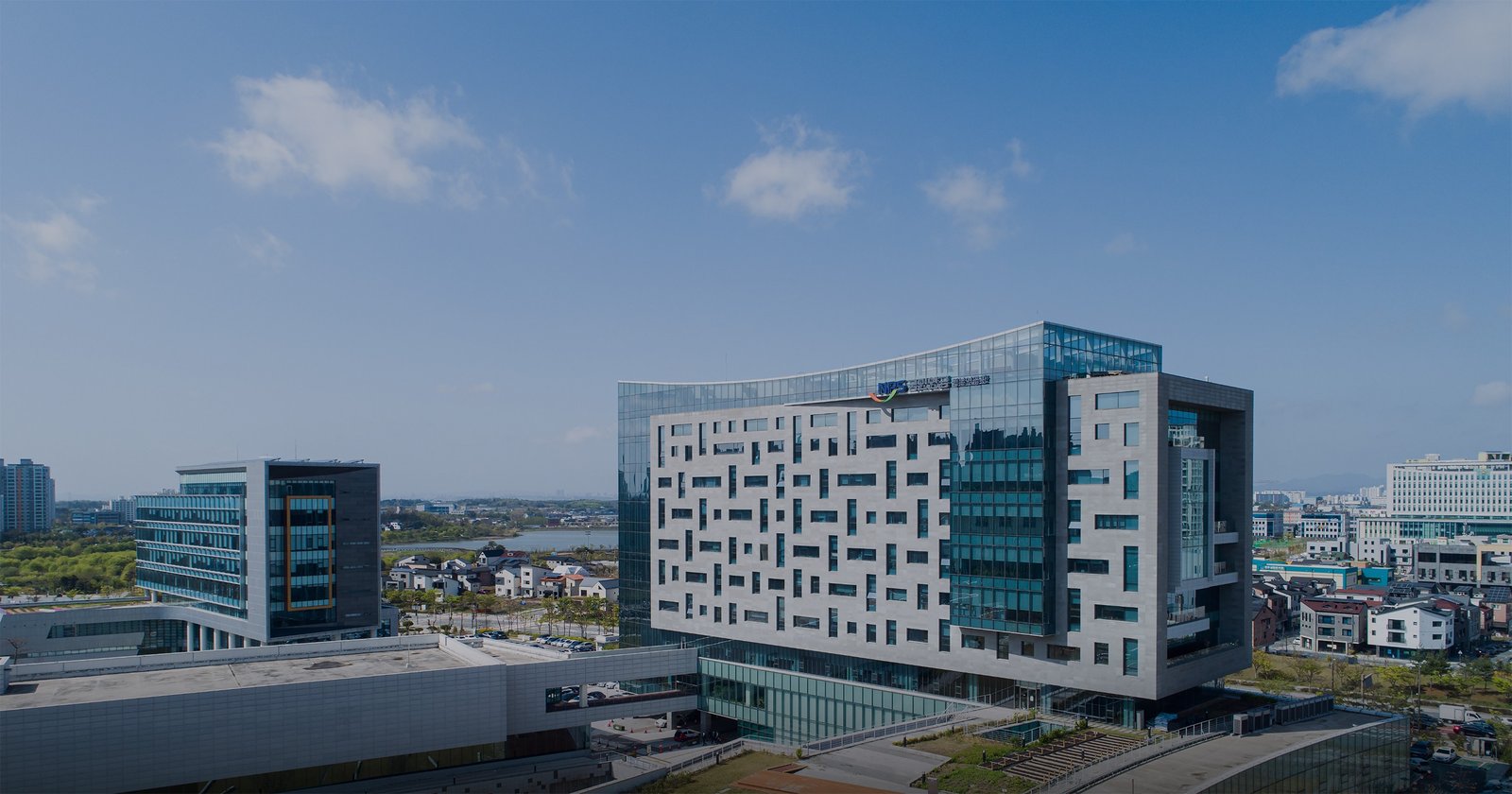
The National Pension Service holds 7–8% of both Samsung Electronics and SK hynix, which makes it the second-largest shareholder in each. A stake that size is not enough to decide how either company is run. But the NPS can influence both companies’ share prices and decisions through three channels: its votes at shareholder meetings, its large-scale trading, and its ownership filings.
What kind of investor the NPS is
The National Pension Service (NPS) is Korea’s public pension, and enrollment is mandatory for Korean citizens. Its fund is managed by the NPS Investment Management unit. At the end of June 2026 the fund held 1,866 trillion won, and its return for the first half was 27.22% (preliminary).
The NPS is called a “whale” of the Korean stock market because of its size.
- At the end of February 2026 the NPS held 395.1 trillion won of Korean stocks, about 7.7% of the market value of the KOSPI (Korea’s main stock index).
- At the end of June, Korean stocks made up 29.1% of the whole fund.
- As of October 15, the NPS held stakes of 5% or more in 287 listed companies.
These Korean holdings are heavily concentrated in two companies. Samsung Electronics and SK hynix grew from 40.4% of the NPS’s Korean stock holdings at the end of March to 55.7% in early July, because both stocks surged in the first half. So much of the story of the NPS’s Korean stocks is the story of these two companies.
By ownership: the second-largest shareholder in both
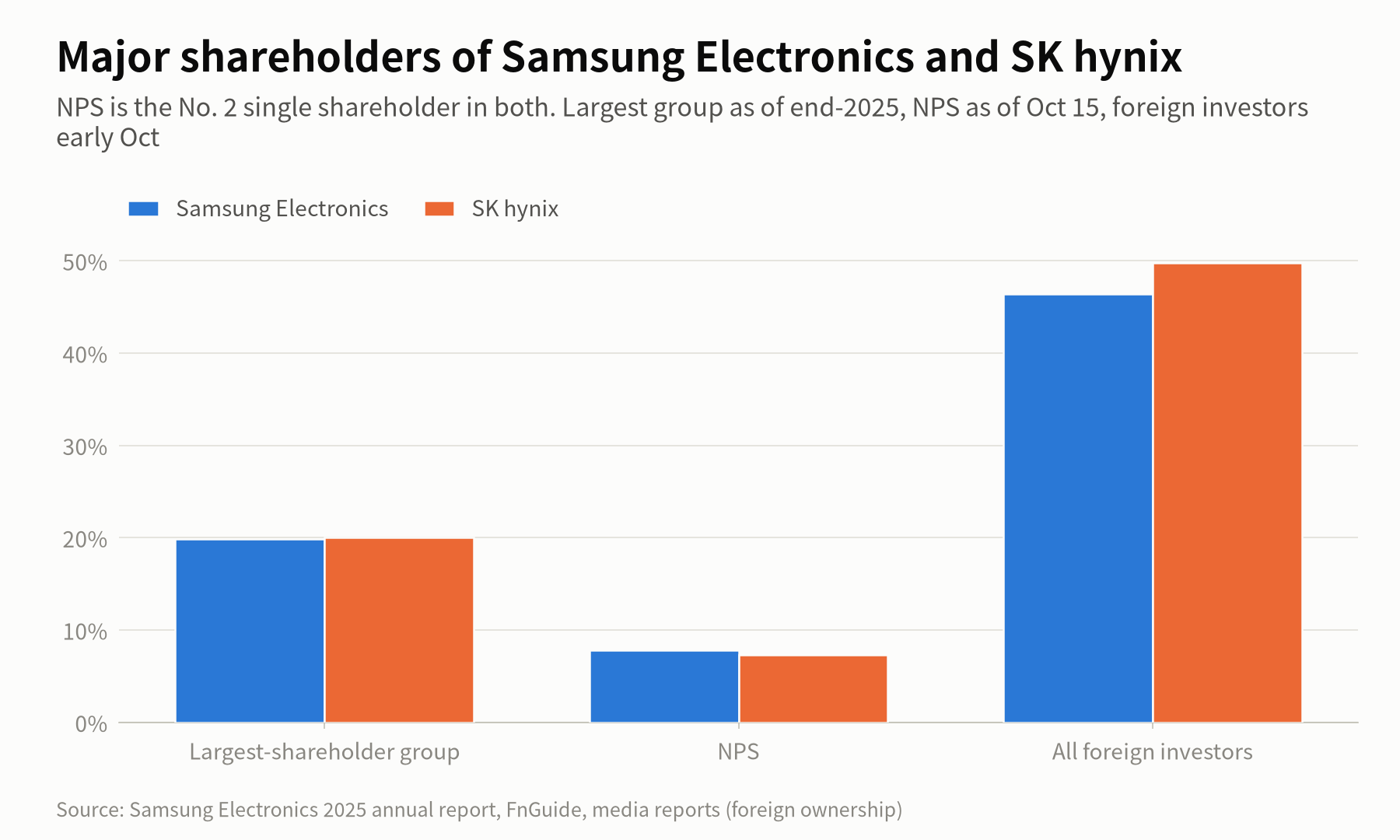
- Samsung Electronics: The largest shareholder is Samsung Life Insurance (8.51%). Adding the stakes of all affiliates and family members, including Samsung C&T and Chairman Lee Jae-yong, gives 19.84% (as of the 2025 annual report). The NPS, at 7.84% (October 15), is the second-largest single shareholder.
- SK hynix: The largest shareholder is SK Square (about 20%), part of the SK Group holding-company structure. The NPS, at 7.32% (October 15), is the second-largest shareholder.
Korea’s large business groups are built on affiliates holding shares in one another, and they keep control with stakes of around 20%. The NPS’s stake is smaller than these group stakes.
Foreign investors as a whole own more. They hold 46.41% of Samsung Electronics (October 2) and about 50% of SK hynix (as reported in early October). But that figure combines a great many overseas institutions and individuals, who do not act with one voice. The NPS, by contrast, is a single investor with a single decision-making structure.
Channel 1: Votes at shareholder meetings
The NPS directly casts about 7–8% of the votes at both companies’ shareholder meetings. On items such as electing directors, setting executive pay limits and approving mergers, that is a large vote for a single shareholder.
The NPS Investment Management unit decides how to vote, and contentious items are reviewed by the Fiduciary Responsibility Committee, made up of outside experts. The NPS adopted a stewardship code in 2018 (principles requiring institutional investors to take a responsible part in the decisions of the companies they invest in), and it discloses how it voted on each item.
The power of these votes has limits, though. At both companies the largest-shareholder group has more than twice as many votes as the NPS. The NPS’s votes are large enough to change the outcome when the largest-shareholder group and other shareholders disagree.
Channel 2: The size of its trades
The second channel is trading. Because the two companies make up more than half of the NPS’s Korean stock holdings, whenever the NPS raises or lowers its allocation to Korean stocks, these two stocks see the largest trades.
Each year the NPS sets a target weight for each asset class. On May 28, 2026, the Fund Management Committee raised the target weight for Korean stocks from 14.9% to 20.8%. When the actual weight moves outside the permitted range, the NPS adds or trims shares to bring it back in line. This is called rebalancing. At the same meeting, to soften the impact on the market, the NPS temporarily widened the permitted range for Korean stocks and reduced the maximum daily trading volume for rebalancing. It does not disclose the range figures.
Because its stakes are large, price moves also have a large effect on the value of its holdings. At October 15 ownership levels, every 10,000 won move in Samsung Electronics shares changes the value of the NPS’s stake by about 4.6 trillion won, and every 100,000 won move in SK hynix shares changes it by about 5.3 trillion won.
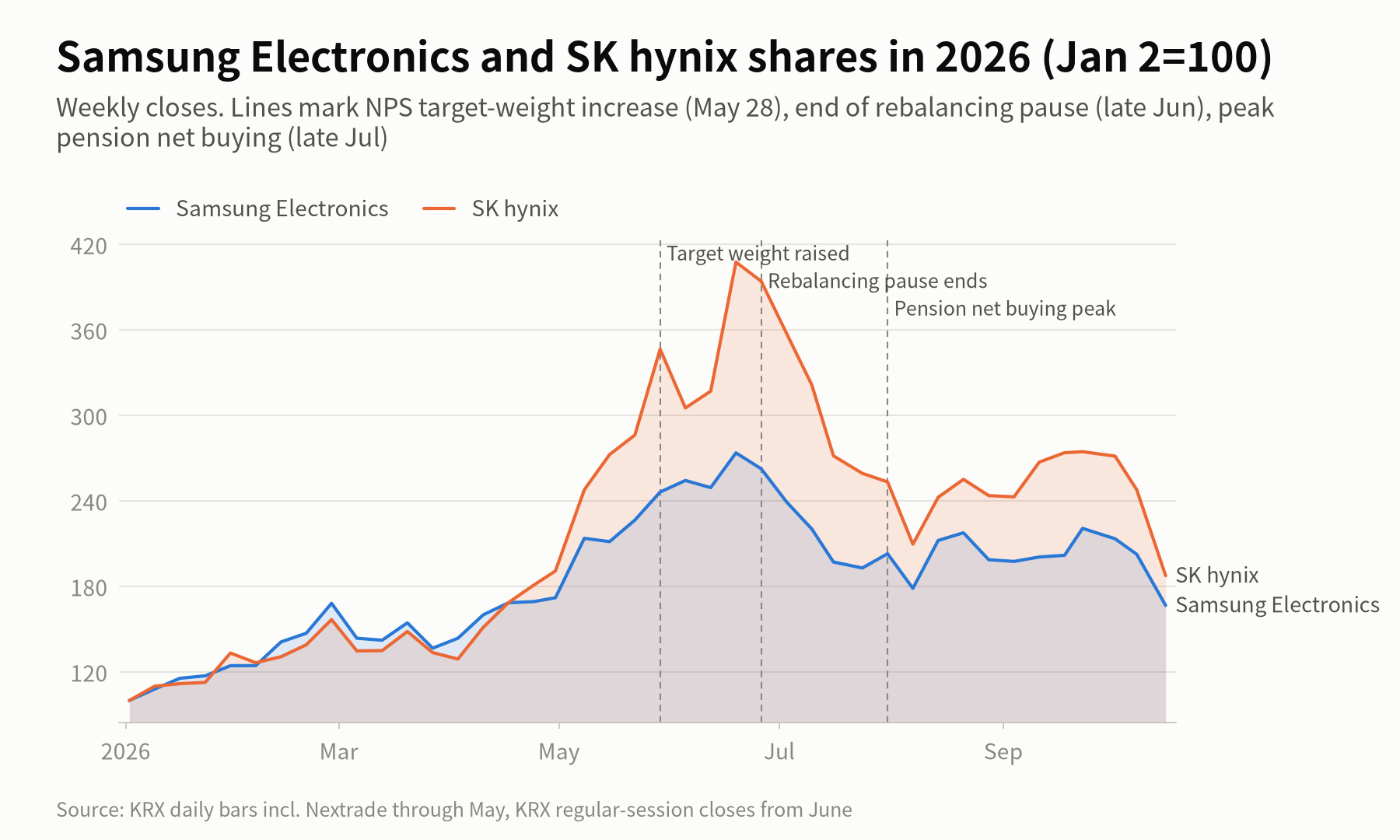
Actual trading is not set by the rules alone. When the KOSPI fell more than 20% in July, the market worried about large-scale selling by the NPS. In fact, pension funds (a category that includes the NPS and other pension and mutual-aid funds) made net purchases of 990.5 billion won on the KOSPI over the month of July. Most of this is estimated to have been the NPS, and the buying was concentrated in the four days from July 28 to the end of the month. By stock, they made net purchases of 1.38 trillion won of SK hynix, which had fallen sharply. Analysts noted that as prices fell and the value of its holdings shrank, the amount of stock the NPS needed to shed to stay on target shrank as well.
This episode shows that the NPS can end up on the buying side in a sharp market drop. That does not mean it does so every time. The direction of its trading depends on the actual weight, the target weight and the permitted range at the time.
Channel 3: The signal in its filings
The third channel is information. In Korea, an investor holding 5% or more of a listed company has to report any change of 1 percentage point or more in its stake to DART (the Financial Supervisory Service’s electronic disclosure system). Records of the NPS raising or lowering its stakes in the two companies are made public through these filings. Market participants use them to read where the NPS is heading.
Once a stake passes 10%, insider rules such as short-swing profit disgorgement apply. This means that profits from shares bought and then disposed of within six months may have to be returned to the company. These rules have made it harder for the NPS to raise its stake in any one company by much.
The limits of its influence
The NPS’s influence is large, but its limits are clear.
- Ownership: At both companies, the largest-shareholder group holds more than the NPS.
- Trading flows: Foreign investors trade in larger volumes. From September 1 to October 2, foreign investors made net sales of 20.305 trillion won on the KOSPI, more than 20 times the pension funds’ net purchases for July (990.5 billion won).
- Investment principles: The NPS aims for long-term returns to pay pensions. Propping up a particular company’s share price or intervening directly in management is not its purpose.
In short, the NPS is not an investor that sets the course of either company on its own. It is, instead, an investor that can add weight to the outcome when shareholders disagree at a meeting, and to the direction of the market when it moves sharply.
Why the NPS matters separately to foreign investors
Compared with other large public pensions, the NPS holds an unusual position.
- United States: By law, the Social Security Trust Fund invests only in special-issue securities issued by the US Treasury. It holds no stocks.
- Norway: The Government Pension Fund Global (GPFG), the world’s largest sovereign wealth fund, invests only in stocks and bonds outside Norway.
- Japan: The Government Pension Investment Fund (GPIF) holds many Japanese stocks, but it does not vote them directly; it leaves voting to outside asset managers. GPIF says this is to avoid directly influencing how companies are run.
The NPS is the second-largest shareholder in two of its country’s flagship companies, votes its own shares, and trades on a scale large enough to affect market flows. In addition, the Fund Management Committee, which sets the NPS’s asset allocation, is chaired by the Minister of Health and Welfare. This year’s rebalancing pause in January and the target-weight increase in May were both decided by this committee.
For foreign investors in Samsung Electronics or SK hynix, then, NPS decisions are one more factor in these stocks alongside earnings and the chip cycle.
Where foreign investors can find the information
- DART: NPS filings on changes in its stakes
- NPS Investment Management website: voting records at shareholder meetings, quarterly and annual returns
- Fund Management Committee announcements: target weights by asset class for the following year (usually in May or June)
Sources: NPS Investment Management (preliminary results for the first half of 2026), Ministry of Health and Welfare (5th Fund Management Committee meeting, May 28, 2026), FnGuide (count of listed companies in which the NPS holds 5% or more), Korea Exchange (trading by investor type), Financial Supervisory Service DART (Samsung Electronics 2025 annual report), US Congressional Research Service (Social Security Trust Fund investments), GPIF stewardship policy (December 2025). Share prices: KRX daily bars including Nextrade trading through May 2026, KRX regular-session closes from June. Photos: National Pension Service; National Pension Service website.
Information only, not investment advice.
See today’s Korea market map →
Related reading
More in Blog
- NAND Outlook Up, Shares Down: Sandisk and Kioxia Report October 29-30
- Nasdaq Down Two Weeks: Can Google, Microsoft and Amazon Stop It?
- Record Quarter, 12% Drop: Why Lam Research Stock Fell
- SK hynix, Kioxia Slide: 3 Reasons Asia's Chip Stocks Fell Together
- Flying Roadster, Grounded Profit: Tesla’s Q3 in 5 Numbers
- Why Month-End Earnings Matter for NAND-Only Kioxia and Sandisk
- Shortage Until 2028 or NAND Glut? Samsung and SK hynix
- US Chip Stocks End an Eight-Day Slide, and Memory Came Back First
- Samsung Electronics and SK hynix Pulled the KOSPI Down 14%. Why?